Want to volunteer with us?
Things we get asked a lot
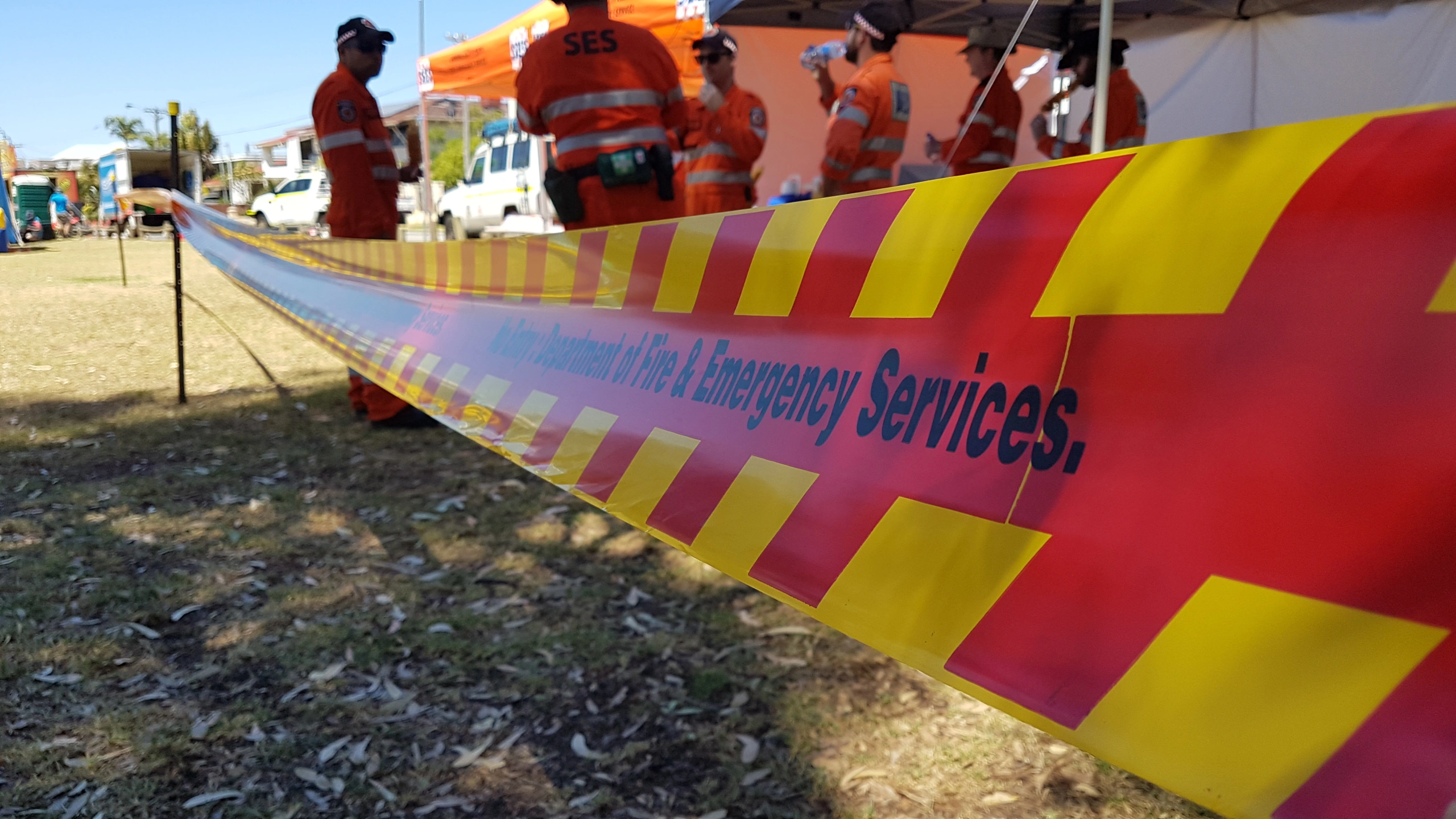
The State Emergency Service (SES) is there to provide assistance when a natural disaster strikes or an emergency situation arises and to help the community recover.
The SES does this through providing emergency repairs to buildings, removing fallen trees, ferrying cargo and passengers in flood waters, assisting with air search observations, searching for missing people, and conducting flood water rescue.
There are many different roles from frontline operational to non-operational support roles. While many members have roles in rescue (frontline) e.g., temporary building repairs, searching for missing people, using chainsaws, and operating flood boats, there are also many people who work diligently behind the scenes assisting with radio communications, computer operations, administration, incident control, planning and logistics inlcuding welfare.
No, all SES members are volunteers and freely give up their time to help the community when required.
Volunteering for the SES should not cost you anything aside from transporting yourself to the unit for training/call-outs and your time. We will provide all of your training, PPE (protective clothing) and equipment.
As an SES volunteer you will receive training in a wide range of practical skills, incident response, and emergency management. Canning South Perth SES holds weekly training on Tuesday nights from 7-10pm. If you have commitments on Tuesday nights that cannot be moved, you may need to consider another unit that trains on a different night.
Specialist training courses are also available and may require the occasional weekend/weekday to complete.
It is expected that volunteers regularly attend weekly training sessions (Tuesday nights). This is because many of the skills you will learn are perishable skills and require regular training to ensure they aren’t lost. Some of the work we do is in less-than-ideal conditions (dark, rain, poor visibility). To ensure that you can operate safely for yourself and to keep your teammates safe it is important that everyone is trained to a high standard and can maintain their skills.
Specialist training courses are often run on weekends and can range from a half day to 2-4 days in length.
High-risk skill sets also require additional mandatory training hours to maintain currency (for example, flood boat and chainsaw operations) which may involve further training outside of that mentioned above.
Ideally, we would like you to attend the unit regularly to maintain your skills, however, depending on the circumstances, we may be able to work out a plan.
When we respond to requests for assistance we generally refer to these as ‘call-outs’.
The number of call-outs we get depends on many factors but generally during summer we tend to get more missing person searches and requests to provide logistical support for bushfire events. During winter we tend to respond primarily to storm damage call-outs. We can have multiple call-outs a day for big storm events and some weeks we don’t have to respond to any requests for assistance.
Please note that given we can respond to call-outs at any time, it is preferable that you have your own mode of transport to get to and from the unit.
No, the SES is not trained to fight fires as this is a specialist skillset that other volunteer units and professional firefighters undertake. We may assist in big fire incidents providing logistical or communications support, but we do not fight fires or provide any training in firefighting.
Please reach out to us to discuss your specific situation to determine what options may be available to you.
Still interested? Contact us here
Please fill out the form below to get on our waitlist for the next intake